How Digital Verification is Changing What Facility Managers Expect from Cleaning Partners
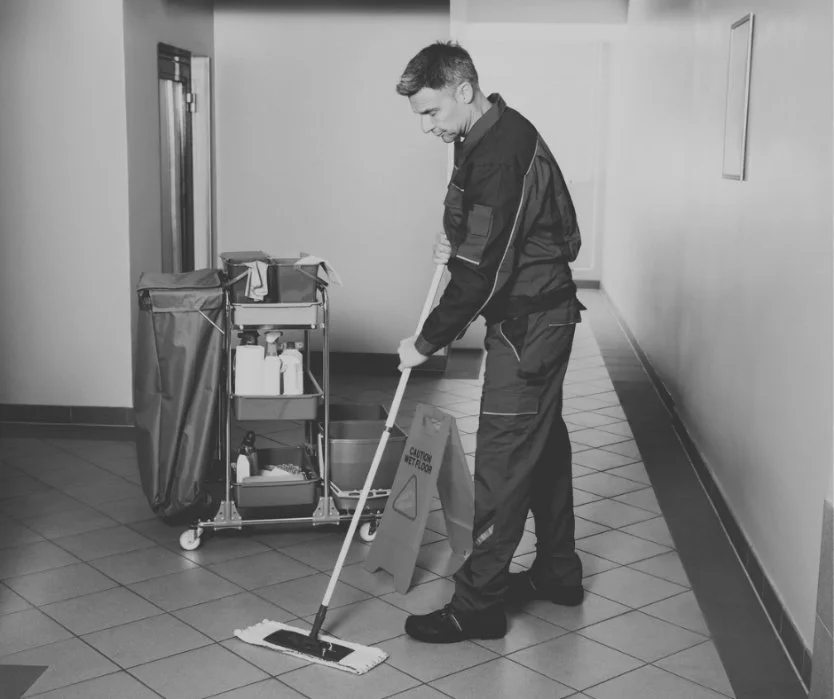
For decades, facility managers were forced to rely on trust when it came to janitorial services. If a space looked clean, the assumption was that the work had been done properly. If a complaint surfaced, the investigation usually started after the damage was already done. That model no longer holds up in modern commercial environments.
Today’s commercial cleaning services operate in facilities where documentation, compliance, and accountability are expected. Digital verification has reshaped how professional janitorial services are delivered and how facility managers judge performance. The companies that thrive are the ones that prove their work instead of simply promising it.
Key Takeaways
· Digital verification replaces assumptions with documented proof for janitorial services.
· Automated reporting provides instant visibility after every single cleaning.
· Facility managers now expect real-time accountability from their janitorial company.
· Verification reduces complaints, investigations, and internal workload.
· Technology-driven janitorial cleaning services outperform traditional cleaning models.
Table of Contents
· What Digital Verification Means for Janitorial Services
· Why Traditional Commercial Cleaning Services Fall Short
· The Pain Points Driving Demand for Digital Reporting
· How Automated Cleaning Reports Change the Game
· What Makes SealX Different
· How Verification Improves Long-Term Facility Performance
· How to Choose a Digitally Accountable Janitorial Company

What Digital Verification Means for Janitorial Services
Digital verification refers to the ability to confirm, record, and document every cleaning task through technology. Instead of relying on paper logs or verbal confirmation, facility managers receive verified proof that janitorial cleaning services were completed as scheduled.
This includes time-stamped task completion, inspection results, issue reporting, and, in some cases, visual confirmation. For commercial cleaning services, this moves the relationship from blind trust to transparent performance.
Why Traditional Commercial Cleaning Services Fall Short
Many janitorial companies still operate using outdated systems. Paper checklists, manual sign-offs, delayed communication, and inconsistent documentation are common. These gaps lead directly to common frustrations:
· Missed areas that go unnoticed until a complaint
· No proof when disputes arise
· Delayed responses to recurring issues
· Unclear accountability when standards slip
Without verification, even professional janitorial services struggle to prove consistency. Facility managers are left reacting instead of managing.
The Pain Points Driving Demand for Digital Reporting
Facility leaders across private sector industries share remarkably similar operational challenges. Digital verification addresses the most common ones directly.
No visibility into daily performance
Managers often have no way to confirm what was actually cleaned on a given day.
Recurring complaints without clear root causes
Without documentation, issues repeat instead of being solved.
Heavy internal oversight burden
Supervisors spend time checking behind vendors instead of focusing on operations.
Lack of audit-ready documentation
When leadership or insurers request proof, data is often fragmented or missing.
These pressures are why janitorial services are rapidly shifting toward automated reporting systems.
How Automated Cleaning Reports Change the Game
When automated reports are sent after every single cleaning, the relationship between clients and their janitorial company fundamentally changes.
Facility managers gain immediate confirmation of:
Which areas were cleaned
What services were performed
Any issues discovered during the shift
Actions taken to resolve problems
Time and staffing verification
Instead of waiting for problems to surface, managers see performance as it happens. This shifts cleaning from a reactive service to a controlled process.
At SealX, these automated reports are delivered after every cleaning without the client needing to request them. That consistent flow of information creates trust, removes friction, and dramatically reduces complaint volume.
What Makes SealX Different
Most janitorial services still rely on periodic reporting or manual confirmations. SealX operates on a verification-first model.
· Every cleaning is documented.
· Every task is time-stamped.
· Every issue is tracked until it is resolved.
· Every client receives automated reports after each service.
This system removes guesswork entirely. Clients never have to wonder whether work was completed or standards were met. The proof arrives automatically.
This level of transparency is what separates SealX from traditional commercial cleaning services. It also creates consistent performance because teams know the work is being measured, not assumed.
How Verification Improves Long-Term Facility Performance
Digital verification does more than confirm work. It actively improves facility outcomes over time.
· Complaint trends become visible and preventable.
· High-risk areas receive targeted attention.
· Resource allocation becomes more accurate.
· Maintenance issues are identified earlier.
· Facility managers gain control instead of chasing problems
Over time, janitorial cleaning services become more efficient, more consistent, and easier to manage.
How to Choose a Digitally Accountable Janitorial Company
Not every janitorial company that claims to use technology actually delivers full performance verification. Facility managers should ask direct questions:
Do you provide automated reports after every cleaning?
Can I see proof of task completion by area?
How are recurring issues tracked and resolved?
Is performance data accessible without manual requests?
Professional janitorial services should operate with the same level of documentation and transparency as any other critical facility operation.